30 Jun 2026Water4 min read
What to Do Immediately After a Flood or Burst Pipe in Singapore
A burst pipe or flood gets worse by the hour. Here is exactly what to do in the first minutes, what to avoid, and when to call in professional water damage restoration.
DRS
DRS Technical Team
Meet our specialists
Highlights
- Switch off the electricity to affected areas before stepping into standing water near power points.
- Shut the main stopcock to stop a burst pipe, then move valuables and photograph everything for insurance.
- Water that sits for more than 24 to 48 hours starts to grow mould, so drying fast is the single most important step.
- For large volumes, contaminated water or soaked electronics, call professional restoration rather than waiting.
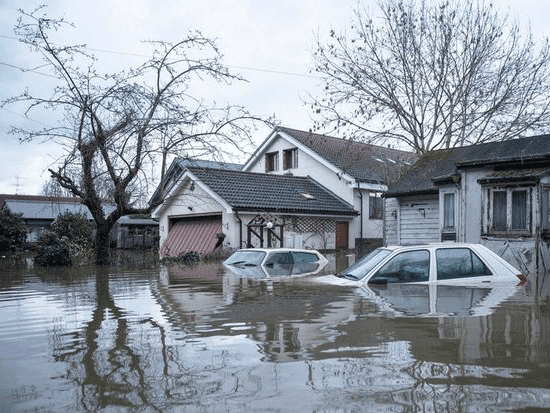
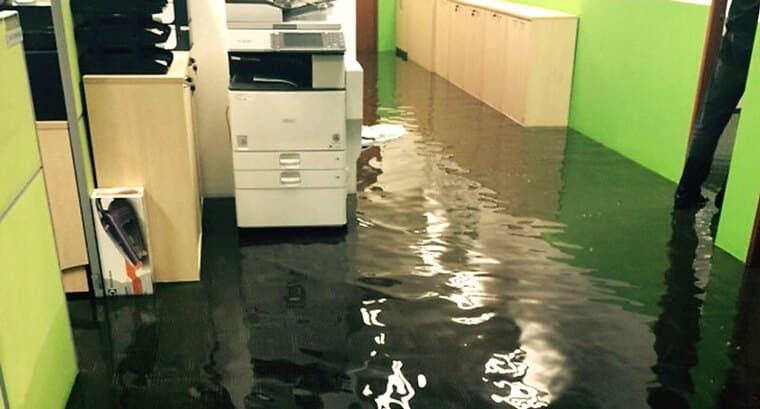
A burst pipe or a flood is one of the few household emergencies where every hour genuinely counts. Water spreads fast, soaks into floors, walls and cavities, and within a day or two it starts growing mould. What you do in the first few minutes makes a real difference to how much you lose. Here is a clear, calm checklist.
First, stay safe
Water and electricity are a dangerous combination. Before you step into any standing water:
- If water is near light fittings, power points or your DB (distribution) box, switch off the electricity to the affected areas at the mains first.
- Do not touch electrical appliances or switches with wet hands or while standing in water.
- If a ceiling is sagging and holding water, or the structure looks unsafe, keep clear and wait for help.
Stop the water at the source
The faster you stop new water coming in, the less damage you have to deal with:
- For a burst or leaking pipe, shut off your main stopcock (usually near the kitchen or in a service duct) to cut the water supply to the flat.
- For an overflowing appliance, turn it off at the tap and the power.
- If the water is coming from the unit above or through your ceiling, you cannot stop it at your end. See our guide to ceiling leaks in HDB flats and condos for who to contact and what to do.
Move valuables and document the damage
Once the water is stopped and it is safe:
- Lift furniture, electronics, documents and valuables out of the water onto a dry, higher surface.
- Photograph and video everything before you start cleaning: the water level, the damage, and the affected items. This is important for your insurance claim.
- Note the time and the cause while it is fresh.
Start removing water and drying, fast
This is the step that decides how much you save. Mould can begin growing within 24 to 48 hours of materials getting wet, a point the US Environmental Protection Agency stresses in its Mold and Health guidance: dry water-damaged areas within that window to prevent mould.
- Remove as much standing water as you safely can with a mop, squeegee or wet-and-dry vacuum (not a normal household vacuum cleaner).
- Open windows and run fans to get air moving.
- Lift soaked rugs and move wet items to dry.
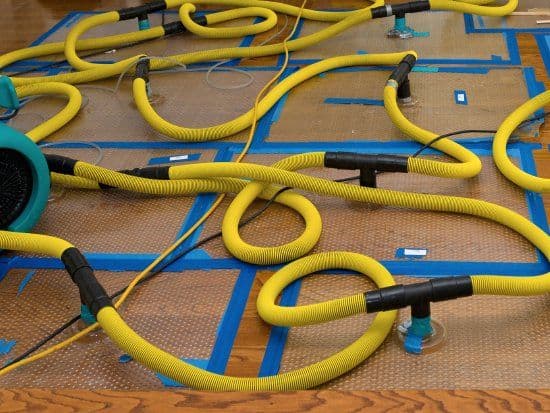
For anything beyond a small, clean spill, household drying is rarely enough. Water hides in wall cavities, under flooring and inside skirting, where it keeps causing damage and feeding mould long after the surface looks dry. That is what professional water damage restoration is for: commercial extraction and drying equipment that reaches the moisture you cannot.
What not to do
- Do not wait to "see if it dries on its own." It usually does not, and the delay is what turns a dry-out into a demolition.
- Do not use a normal vacuum cleaner on water, it is an electrocution and equipment hazard.
- Do not enter rooms with sagging ceilings or where water is in contact with live electrics.
- Do not assume the water is clean. Water from sewage, drains or floodwater can be contaminated and needs proper handling.
When to call a professional
Call a restoration specialist straight away if:
- the volume is large or has spread across multiple rooms,
- the water is contaminated (sewage, drain or floodwater),
- electronics, machinery or important documents have been soaked,
- it is a commercial or industrial property where downtime is costly, or
- you simply cannot dry it out quickly with what you have.
DRS runs a 24/7 emergency line and mobilises fast, because water damage escalates by the hour. Call 6241 9443 or WhatsApp 9222 9222. If mould has already started, our mould removal service treats it at the source.
Will insurance cover the damage?
It depends on your policy, so check yours and notify your insurer promptly. In Singapore, HDB Fire Insurance generally covers reinstating HDB-built internal structures and may cover water damage from a burst pipe, but it does not cover your renovations, furniture or belongings, which need separate home-contents insurance. Whatever your cover, the photos and documentation you took earlier, plus a professional inspection report, make the claim far smoother.
Need disaster restoration help?
We respond 24/7 across Singapore and the region.
FAQ
Frequently asked questions
Stay safe around electrics, shut your main stopcock to stop the water, then move valuables and photograph the damage before you start drying.
Related service
Water Damage Restoration
Sources and helpful resources
Keep reading