30 Jun 2026Water5 min read
Ceiling Leaking in Your HDB or Condo? What to Do and Who to Call in Singapore
A ceiling leak from the unit above is one of the most common home problems in Singapore. Here's who is responsible, how to report it, and how to get it dried and repaired before it spreads.
DRS
DRS Technical Team
Meet our specialistsHighlights
- For HDB inter-floor leaks, repairing the floor or ceiling slab is a shared responsibility between the upper and lower-floor owners.
- Leaks from common property such as the roof or void deck are handled by your Town Council; in a condo, notify your MCST.
- The longer the ceiling stays wet, the more damage and mould you get, so dry the area fast while the cause is being resolved.
- HDB's Goodwill Repair Assistance scheme can help share the cost of leaks caused by normal wear and tear.
A wet patch on the ceiling, a steady drip after someone upstairs showers, paint bubbling or peeling above your toilet: a ceiling leak from the unit above is one of the most common home problems in Singapore, and one of the most frustrating, because the source is not in your own home. This guide explains why it happens, who is responsible, how to report it, who to call, and how the leak is actually fixed.
Why is my ceiling leaking?
In most HDB flats and condos, a ceiling leak happens when water from the unit above seeps through the concrete floor slab into your ceiling. This usually comes down to wear and tear of the waterproofing membrane and screed in the floor slab, which breaks down over time. It is more common in older buildings and almost always shows up in wet areas first: under toilets, bathrooms and kitchens.
Less often, the water comes from a burst or choked pipe, a failed floor trap, or, on the top floor, from the roof. Because the water can travel along the slab before it drips through, the wet patch on your ceiling is not always directly below the actual source.
Who is responsible for an HDB or condo ceiling leak?
This is the question everyone asks first, and the answer depends on where the leak comes from.
For a typical inter-floor leak between two HDB units, the upper and lower-floor flat owners have a shared responsibility for maintaining the structures of their flats, including the floor and ceiling slabs. If the slab needs repair, you and your neighbour arrange the repair work together and split the cost. This is HDB's official position, set out on their Ceiling Leaks guide.
If the leak comes from common property rather than a neighbour's unit, responsibility shifts:
- A leak from the roof of the block is part of the common property maintained by the Town Council. Contact them to rectify it.
- A leak affecting the void deck is jointly arranged between the Town Council and the upper-floor owner.
If you live in a condominium, the same logic applies but through different parties: notify your MCST (Management Corporation) or managing agent, who will help establish whether the leak is from a neighbour's unit or from common property, and guide the next steps.
How to report an HDB ceiling leak
If the leak is coming from the unit above, the practical sequence is:
- Speak to your upstairs neighbour first. Let them know about the leak and try to agree on getting the source checked. Most cases are resolved neighbour-to-neighbour once both sides understand it is a shared responsibility.
- Engage a contractor together to confirm the source and recommend a repair method. You and your neighbour agree on the method and how to split the cost.
- If you cannot resolve it directly, HDB offers help through its Goodwill Repair Assistance scheme (more on cost below), and for leaks from common property you report to your Town Council.
In a condo, report the leak to your MCST or managing agent instead of the Town Council, and they will coordinate the inspection.
Who do I call for a leaking ceiling?
There are really two jobs, and sometimes two different specialists:
- Finding and fixing the source (the waterproofing or pipe in the slab) is done by a waterproofing contractor, usually engaged jointly with the upstairs neighbour.
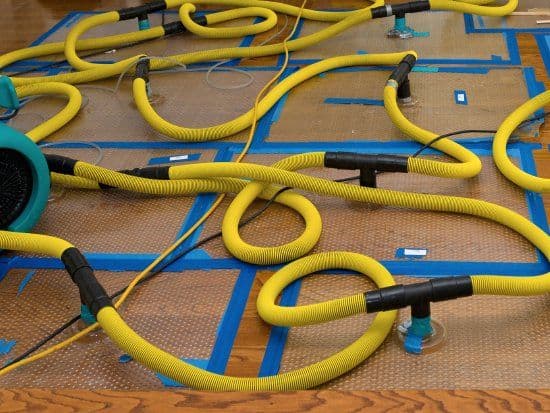
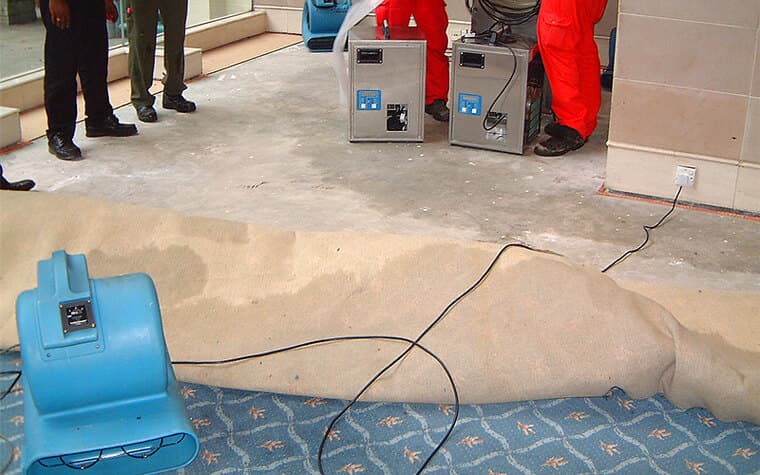
- Drying out and restoring your unit (the soaked ceiling, walls and finishes, and preventing mould) is restoration work. This is where a disaster-restoration specialist like DRS comes in: we extract the moisture, dry the structure with professional equipment, and restore the finishes, then document the cause to support any cost-sharing or insurance claim.
The two are connected. Repairing the waterproofing stops new water coming in, but the water already soaked into your ceiling and walls will keep causing damage and grow mould if it is not dried out properly. For that side of the problem, see our water damage restoration and water leakage repair service.
What to do right now, before it gets worse
While you sort out responsibility and repairs, act quickly to limit the damage:
- Stay safe. If water is near light fittings, power points or your DB box, switch off the affected circuit before touching anything.
- Contain the water. Place a basin or bucket under the drip and lay down towels to protect your flooring and belongings.
- Move valuables and electronics out from under the leak to a dry spot.
- Photograph everything (the wet ceiling, the damage, the date) for your insurer and for any cost-sharing discussion with your neighbour.
- Dry the area fast. Water that sits in a ceiling or wall for more than 24 to 48 hours starts to grow mould, so the sooner the area is dried, the less you lose.
How is a ceiling leak fixed?
Once the source is confirmed, the repair depends on the severity:
- Re-screeding the floor of the unit above is HDB's recommended option for a worn waterproofing layer.
- PU (polyurethane) injection, the flood-infusion method, or nanotechnology waterproofing coatings are alternatives your contractor may suggest, sometimes in combination.
- A long-collar floor trap grating is recommended where the leak is around the floor trap.
After the source is repaired, your own unit still needs to be restored: the soaked ceiling and walls dried out, treated against mould, and the finishes made good. Because Singapore's humidity lets mould take hold quickly in damp plaster and concrete, drying is not optional. If mould has already appeared, our mould removal service treats it at the source rather than just painting over it.
How much does it cost, and can HDB help?
The repair cost depends on the method and the extent of the damage, which is why a contractor assesses on site rather than quoting blind. The good news is that for HDB flats, help is available: under the Goodwill Repair Assistance (GRA) scheme, for leaks arising from natural wear and tear over time, HDB pays 50 percent of the repair cost, while the remaining 50 percent is shared equally between the upper and lower-floor flat owners. Details are on HDB's Ceiling Leaks guide.
Need disaster restoration help?
We respond 24/7 across Singapore and the region.
FAQ
Frequently asked questions
For an inter-floor leak, the upper and lower-floor owners share responsibility for repairing the floor and ceiling slab and split the cost. Leaks from common property, such as the roof or void deck, are handled by the Town Council.
Related service
Water Damage Restoration
Sources and helpful resources
Keep reading